
The two-year clock: the new-build warranty deadline tenanted landlords miss
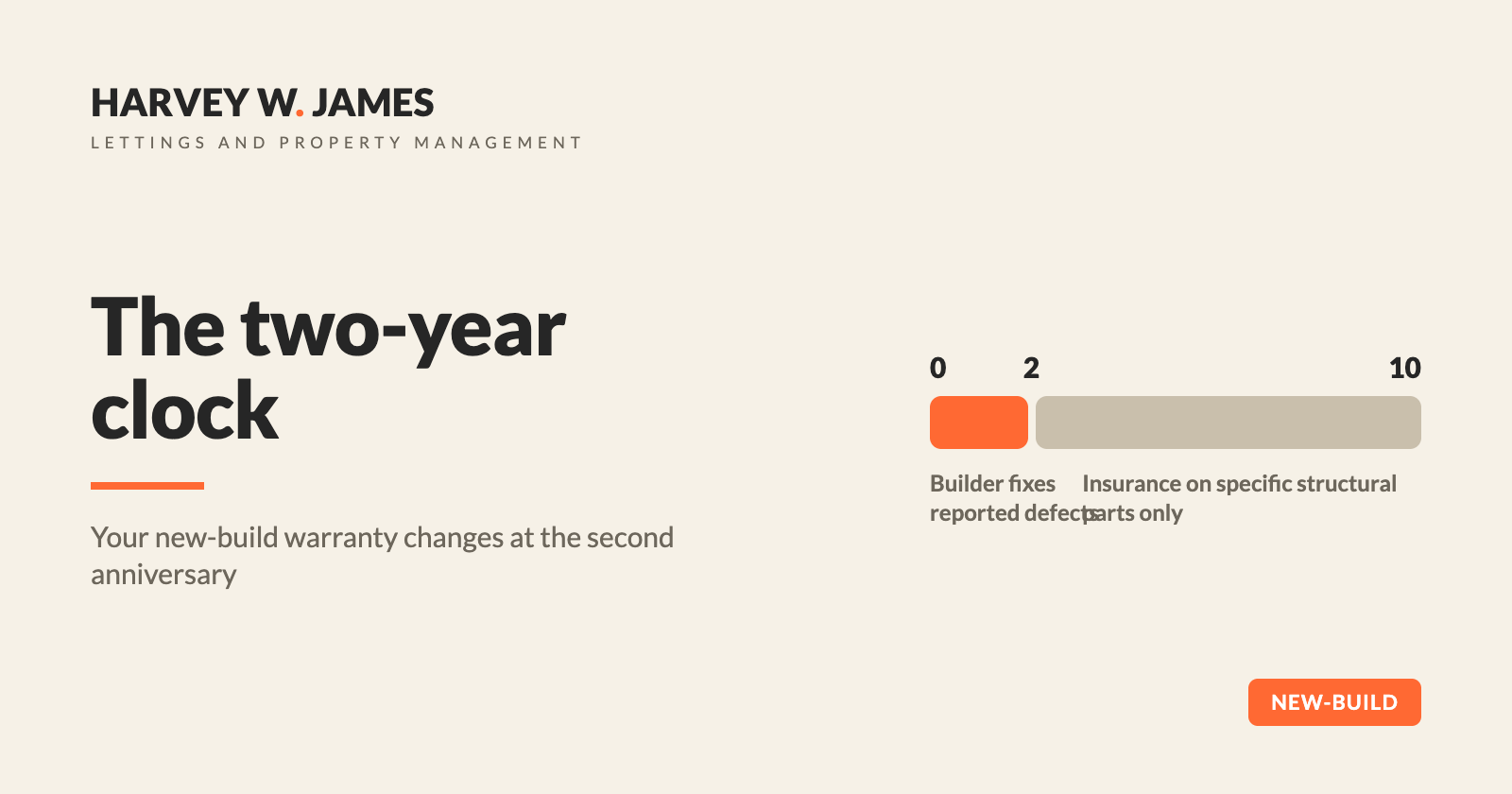
Short answer: On an NHBC Buildmark home, the developer is liable for defects reported to them within the first two years of the policy. From year three to year ten, cover narrows to damage from defects in specific structural parts, subject to a minimum claim value. On a tenanted flat that two-year clock runs quietly — because the tenant reports faults to the agent, not the builder.
Most new-build landlords know they have "a ten-year warranty". Far fewer know the warranty changes character at the second anniversary — and that on a rented flat, the reporting chain is exactly what makes the deadline easy to miss.
What does the two-year builder warranty actually cover?
Under NHBC Buildmark, the first two years are the builder warranty period: the builder is liable to put right defects — the failed extractor run, the dropped door, the leaking shower screen — provided they are reported to the builder within that period. NHBC stands behind the obligation if the builder fails or becomes insolvent.
What changes in years three to ten?
From year three, Buildmark becomes an insurance policy on specific parts of the structure — the cost of repairing damage caused by defects in defined elements — and claims are subject to a minimum claim value — the amount is set on each policy certificate, so check yours. The practical translation: the dripping en-suite that was the builder's problem in month 20 is, in month 30, usually yours.
| Period | Who fixes what |
|---|---|
| Years 0–2 | The builder puts right defects reported to them in the period; NHBC guarantees the obligation |
| Years 3–10 | NHBC insurance on damage from defects in specific (mainly structural) parts, above a minimum claim value |
| Any time | Wear, tear, misuse and maintenance are never warranty items — that is the landlord's (or tenant's) side of the line |
Why do tenanted flats miss the deadline?
Because the reporting chain points the wrong way. A tenant emails the agent about a sticking balcony door; a generalist agent books a handyman; the fault is "fixed" for £120 and never reported to the developer. Do that for two years and the landlord has paid trade rates for a list of faults the builder was contractually obliged to fix free — and when a related failure surfaces in year three, the paper trail that would have supported a claim does not exist.
This is the distinction we wrote about in snagging vs maintenance: confuse the two categories and you pay twice. The two-year anniversary is where that confusion stops being recoverable.
What should a new-build landlord do before the anniversary?
- Know your date. The policy runs from the cover start, not your completion or the first tenancy. Dig out the Buildmark certificate.
- Sweep before the clock stops. In the final months of year two, walk the flat (or have your agent do it at inspection) against the original snagging list plus everything the tenant has reported since day one.
- Report in writing, to the builder, before the date. A defect logged with the developer inside the period is theirs even if the fix lands after it.
- Keep the log. Years 3–10 claims lean on history — when it started, when it was reported, what was done.
How we run this for managed landlords
Every fault a tenant reports to us on a new-build goes into the property's record labelled as snagging or maintenance at the point of logging — so the two-year sweep is a filter, not an archaeology project. Our aftercare inspections and the refresh cycle both feed the same record. We won't quietly send a contractor to a fault the developer is liable for — a £120 invoice for the builder's defect is not service, it is leakage with a receipt.
If your new-build's second anniversary is inside the next six months, that sweep is worth an hour of anyone's time. Book a free new-build rental appraisal and we'll include the warranty position in the read.
Sources
General information, not legal advice. Check your own policy's terms — other warranty providers (LABC, ICW and others) differ in detail.